
How do I find a business angel for my startup in Germany?
Business angels are experienced entrepreneurs or managers who bring private capital, know-how and contacts into young companies. You find them through networks such as Business Angels Netzwerk Deutschland, through referrals from your own network, and at founder events. What decides the outcome is solid preparation: pitch deck, financial plan and a realistic valuation.
As of October 2026. Figures on funding and ticket sizes come from the sources cited. Verify them before deciding.
Jump to a section: What angels deliver · Finding angels · INVEST grant · Preparation
What business angels deliver — and what they expect
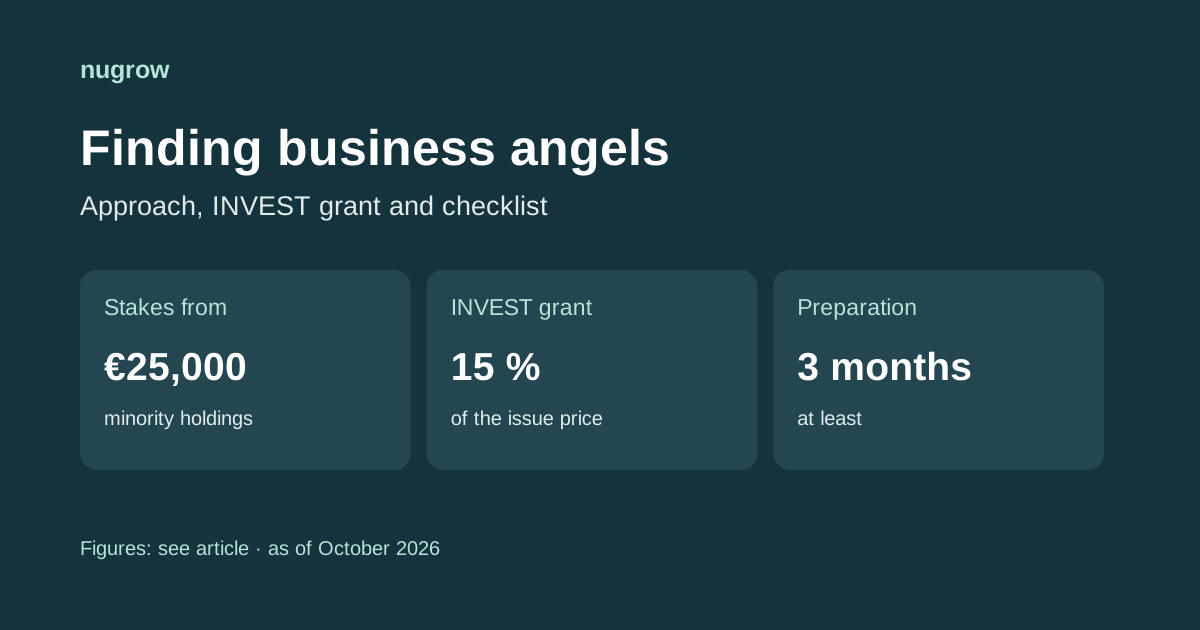
According to the German founders' portal (in German), business angels seek minority stakes from 25,000 euros. The average annual commitment is between 50,000 and 100,000 euros. Beyond money, they contribute business contacts, commercial advice and mentoring — without working in the day-to-day business. After four to six years an angel typically exits and wants to sell the stake at a return. Factor that into your plan for the later exit.
Preferred are startups with an innovative idea and good growth prospects. How angels differ from funds and other investors is explained in How to find investors: a guide for startups.
Where to find business angels
- Networks: Business Angels Netzwerk Deutschland and regional angel clubs broker contacts and organise pitch events.
- Referrals: Warm introductions through founders, advisors and alumni networks usually work better than cold outreach.
- Events and platforms: Startup events, accelerator demo days and investor platforms.
Check who fits you. The founders' portal advises obtaining references and checking what sector experience and network an angel brings.
INVEST grant: an incentive for angels
Germany's Federal Office for Economic Affairs and Export Control (BAFA) supports private investors in young innovative companies with the INVEST grant for venture capital. Per the BAFA page (in German, as of April 2026), the investor receives 15 percent of the issue price of the shares as an acquisition grant, up to 100,000 euros per person. The minimum investment is 10,000 euros. After a holding period of at least three years, an exit grant on the gain is available on sale.
Among other conditions, your company must be a corporation based in the EEA, have at most 50 employees and 10 million euros of revenue, be younger than seven years and operate innovatively. The conditions have changed several times in recent years and older sources cite different figures — rely on the current BAFA page and point angels to it.
Preparation: six steps before the first outreach
- Clarify numbers and assumptions: Plan revenue, costs and liquidity with assumptions you can defend. The 13-week cash flow forecast helps.
- Determine the capital need: How much money do you need, and to which milestone?
- Position the valuation: What valuation is realistic? Methods and calculators are in Calculating a startup valuation (in German).
- Model the dilution: What remains yours after the round? Use the dilution calculator.
- Collect the documents: Pitch deck, financial plan, cap table, shareholders' agreement. A guide is in Data room readiness for the funding round.
- Understand the terms: The key clauses are explained in Term sheet explained (in German). Whether a convertible loan fits is covered in Convertible loan or equity round.
The founders' portal recommends at least three months of preparation and involving lawyers and auditors. The investment agreement should define milestones and payout dates for individual tranches — after a patent filing or an incoming order, for example.
The outreach: short, specific, verifiable
Tell the angel in a few sentences what you are building, what traction you can prove, how much capital you are raising and why he or she in particular fits. Attach the pitch deck — not the whole data room. Offer a short call and prepare for questions on costs, burn rate and milestones. If you want support along the way, nugrow helps with fundraising.
Frequently asked questions
How much does a business angel typically invest?
According to the German founders' portal (Existenzgründerportal), business angels seek minority stakes from 25,000 euros. The average annual commitment is between 50,000 and 100,000 euros.
What is the INVEST grant for venture capital?
A grant from Germany's BAFA for private investors who invest in young innovative companies. Per the BAFA page (as of April 2026), the acquisition grant is 15 percent of the issue price, with a minimum investment of 10,000 euros. Check the conditions with BAFA before applying.
How much preparation time should I plan?
The German founders' portal recommends at least three months of preparation and involving external experts such as lawyers and auditors.
Sources and status
Figures on stakes and preparation per the German founders' portal; INVEST conditions per the BAFA page (updated 30 April 2026) — both in German. This is not legal or investment advice. As of October 2026.