
Finding investors is less a question of access than of fit. Most founders approach too many investors who do not match their stage, market or ticket size, and lose months doing so. A systematic approach means fewer investors approached and more answers received. This guide shows which investor types exist, how to build a target list that holds up and what matters in the outreach.
Key takeaways
- Fit beats reach: stage, ticket size, sector and region have to match the investor, otherwise the request goes unanswered.
- A warm introduction through a founder, advisor or another investor opens doors far more often than a cold email.
- Having numbers, pitch deck and data room ready before the first call shortens the whole process noticeably.
Which investor types exist
Not every investor suits every stage. The main groups differ mostly in ticket size, expectations and speed.
Business angels
Private investors who often come in as the first outside money, frequently with their own founder or industry experience. They decide quickly and personally, but usually write smaller cheques.
Venture capital funds
Professional funds invest in defined stages (pre-seed, seed, Series A and later) and expect a robust growth model. They examine numbers, market and team thoroughly, but bring capital, network and follow-on funding.
Family offices and corporate investors
Family offices invest an entrepreneurial family's wealth and often think longer-term than funds. Corporates look for strategic proximity to new technologies. Both decide more slowly, but can be the right partners for later rounds.
Public funders
Development banks, grants and public investment companies complement private funding and, depending on the instrument, dilute little or not at all. They pay off especially early, but come with formal requirements.
How to build a target list that works
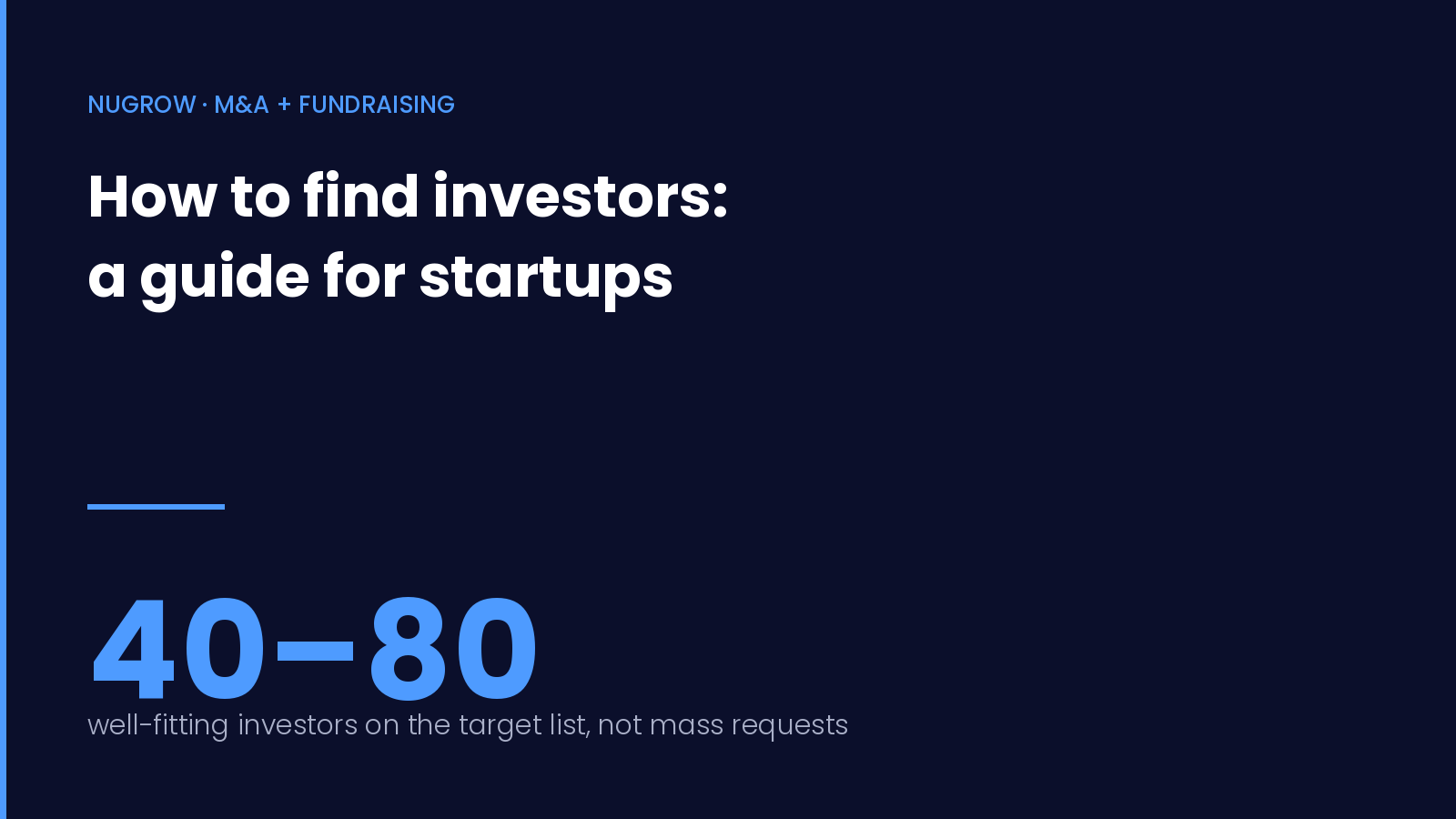
A good list contains 40 to 80 investors sorted by fit, not hundreds of names from a database. Four criteria decide:
- Stage and ticket size: Does the investor actually invest at your stage and in the size you are looking for?
- Sector and business model: Are there comparable holdings in the portfolio showing that the topic is understood?
- Region and lead role: Does the investor lead rounds or only participate, and does it invest in your region?
- Activity: Has the investor made new investments in the last twelve months?
Sort the list into three tiers. Start with the second tier and practise the pitch on them. Your dream investors follow afterwards. That way you collect feedback before the most important conversations.
Outreach: warm beats cold
The most effective approach is a personal introduction by someone the investor knows: another founder from the portfolio, an advisor or an existing investor. A cold email can work, but it needs a short, specific message with three parts: what you do, which metric proves your growth and why this particular investor fits. The pitch deck follows only on request. How a convincing deck is structured is covered in pitch deck data and funding need after the round.
An investor rarely says no because the idea is missing. Usually reliable numbers are missing, or the fit with the stage.
What should be ready before the first call
Investors ask the same questions early: how long is the runway, how are revenue and burn developing, what is the funding need of the next round and what will the capital be used for? Being able to answer those immediately signals preparation. A current financial model, a clean cap table and a structured data room all help. To prepare, see data room readiness for the funding round. You can estimate your own runway quickly with the runway calculator.
Common mistakes when looking for investors
- Spreading too wide: Mass requests to investors without stage or sector fit go unanswered and harm your reputation.
- Starting too late: A round usually takes several months. Starting only when runway is short means negotiating from weakness.
- No process: Without a pipeline overview, replies get lost and conversations drift apart in time instead of converging on one close.
- Numbers that do not hold up: Contradictions between pitch deck, model and data room cost trust.
Common questions
Where do I find suitable investors for my startup?
Through investor databases, fund portfolio pages, startup networks, accelerator programmes and personal contacts. The source matters less than matching stage, sector, ticket size and region.
How many investors should I approach?
A target list of 40 to 80 suitable investors is enough for most rounds. What matters is that it is prioritised by fit and that you run the conversations in parallel.
Do I need an advisor to find investors?
No, but an experienced advisor can speed the process up, open contacts and prepare numbers and documents so they stand up to scrutiny. That pays off above all for the first larger round.
Read on
If you would like support with target list, documents and outreach, see our fundraising advisory. For what happens once the round is closed, read finance setup after a funding round.