
When does a private equity fund fit an SME?
A private equity fund invests capital and know-how in a company in order to sell it on at a profit after a few years. For SMEs this is an option when capital for growth, an acquisition or a succession is missing — and the shareholders are prepared to accept governance rights and regular reporting. What decides the outcome is whether numbers and processes stand up to scrutiny.
Jump to a section: Deal types · Opportunities and risks · What changes · Preparation
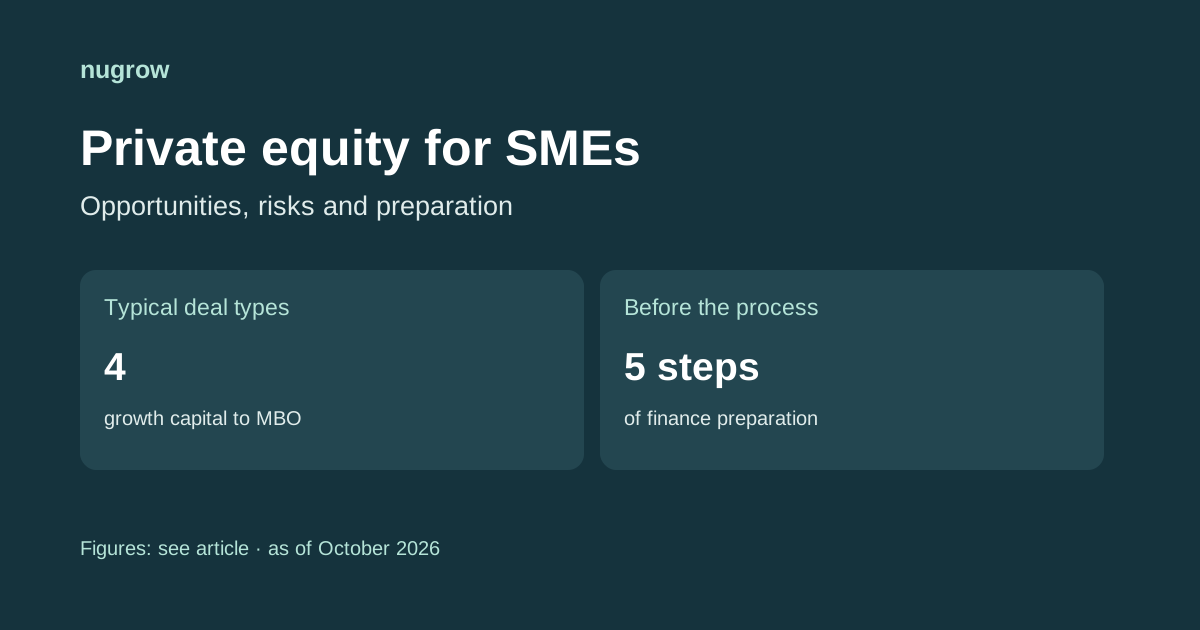
Four typical deal types
- Growth capital: The fund invests in a revenue-generating company that needs capital for expansion, new markets or products — often as a minority stake.
- Buyout: The fund takes a majority. That fits successions or consolidation plays, for example. More on the financing structure is in LBO basics (in German).
- Succession solution: When owners step back and no internal or family solution exists.
- MBO and MBI: The existing or an external management team takes over the company, backed by the fund.
Opportunities and risks
Opportunities: capital for growth without a bank loan, experience in building structures and reporting, access to networks and M&A know-how, a clear path to succession.
Risks: You give up shares and with them influence. The fund pursues its own return target and an exit, typically planned after a few years. Consent requirements and target agreements limit your freedom. With high leverage (buyout), pressure on liquidity rises. Agreement on valuation and terms is not a given. The key clauses are explained in Term sheet explained (in German), the valuation methods in Calculating a valuation (in German).
What changes after the fund invests
With a fund usually come an advisory or supervisory board, monthly reporting, target agreements and consent requirements for major decisions. The finance function must deliver reliable numbers faster: closings, a liquidity forecast, budget-versus-actual and KPIs. How such a reporting package is built is shown in Effective investor reporting. To strengthen the finance function at short notice, an interim CFO is an option.
Preparing the finance side before the process
- Clarify quality of earnings: Which results are sustainable, which one-off? Buyers examine this in the financial due diligence — see Financial due diligence: what buyers check.
- Order working capital and debt: Liquidity and net debt are central price factors.
- Substantiate the plan: A plausible plan with defensible assumptions and scenarios.
- Build the data room: Provide reports, contracts and reconciliations in an orderly way — see The data room for the financial due diligence.
- Make the finance function ready: Document controls, closing processes and responsibilities, as described in Exit readiness of the finance function.
nugrow supports mid-sized companies and PE-backed businesses with these tasks. An overview is on Finance for private equity; for preparing a sale there is the financial due diligence.
Frequently asked questions
When does a private equity fund fit an SME?
When the company needs capital for growth, an acquisition or a succession, can present reliable numbers, and is prepared to accept governance rights and reporting. The fund intends to sell later at a profit.
What changes after a fund invests?
Usually an advisory or supervisory board, monthly reporting, target agreements and consent requirements are added. The finance function must deliver reliable numbers on shorter deadlines.
What does a fund examine before investing?
Typically a financial due diligence covering quality of earnings, working capital, debt and the plan, plus legal and tax reviews. A well-maintained data room speeds up the process.
Note
This article gives an overview and is not legal, tax or investment advice. Deal terms differ by fund and case. As of October 2026.